
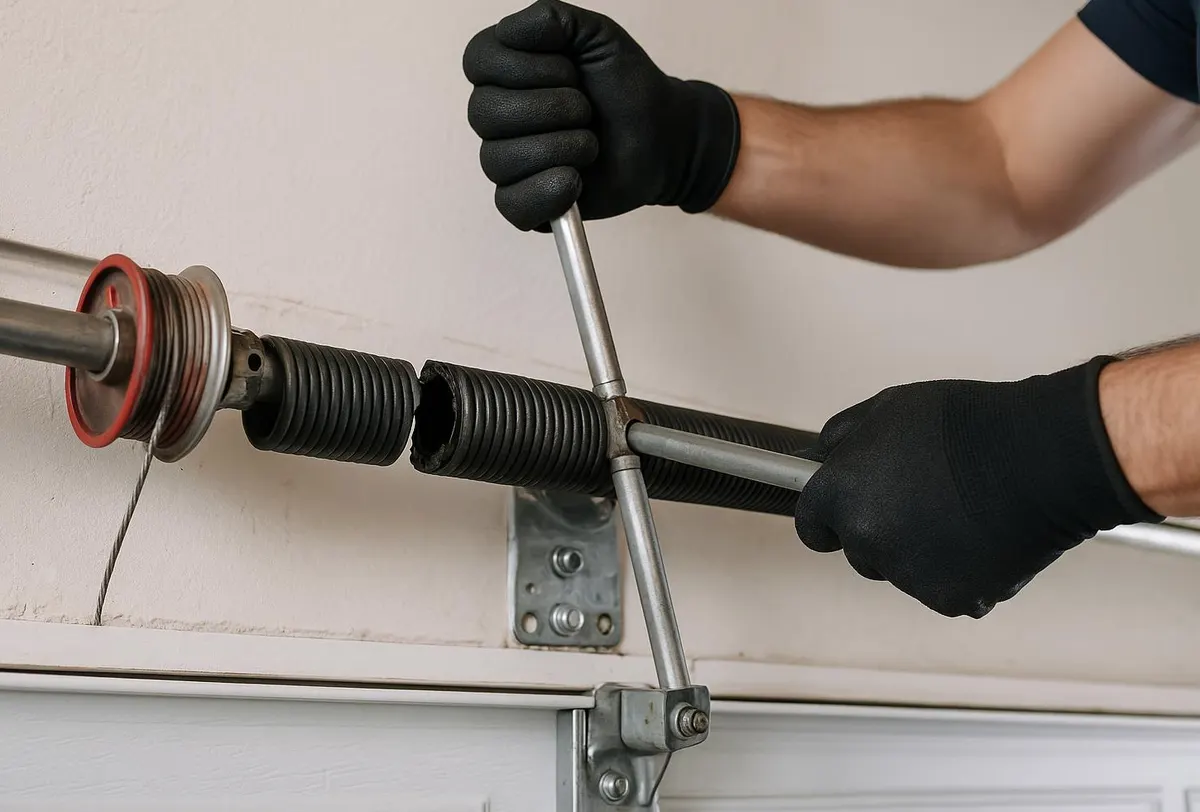
You're standing in the garage, hand on the manual release, and the door feels heavier than it did last month. Or maybe you noticed the door hanging a little crooked when it opens, one side higher than the other. Nothing dramatic happened — no bang, no snap — but something's different, and you're wondering if you should be worried.
You should. A garage door spring rarely fails without warning. It wears gradually, and the signs show up weeks or even months before the actual break. The trouble is most homeowners don't know what they're looking at until the spring lets go — usually with a loud bang and a door that won't budge. Walk through this checklist in your own garage and you can usually catch the problem while it's still a simple repair instead of an emergency call.
Why Springs Wear Faster Here
South Florida isn't gentle on garage door hardware. Humidity and afternoon downpours keep moisture in the air even when it isn't raining, and that moisture finds its way onto exposed metal coils. Add salt air if you're closer to the coast, and steel springs corrode faster than they would in a drier climate. Heat also matters — constant temperature swings between a scorching garage and air conditioning inside the house cause metal to expand and contract, which accelerates metal fatigue over time. None of this means your springs are defective; it just means the wear-and-tear clock runs a little faster here than it does up north.
Walk the Checklist
1. Look for Gaps Between the Coils
Stand at the side of a torsion spring (the one mounted horizontally above the door, usually on a metal shaft) and look closely at the coils. A healthy spring has coils sitting close together with even, consistent spacing. If you see a noticeable gap stretching between coils — wider than the rest — that section has lost tension and is stretching unevenly. This is one of the clearest early signs of a spring nearing the end of its life.
2. Check for Rust or Flaking Metal
Rust on a spring isn't just cosmetic. Surface rust weakens the metal at a microscopic level, creating small pits where stress concentrates. Over time those pits become the starting point for a crack, and the spring breaks there first. If you can see orange discoloration, flaking, or a rough, pitted texture rather than smooth metal, the spring has already lost strength even if it still looks intact.
3. Watch How the Door Opens — Is It Level?
Most residential garage doors use two torsion springs, one on each side. If one spring is weaker than the other, the door will visibly tilt as it opens or closes — one side lifting faster, leaving the door crooked for a second before it catches up. This uneven lift is hard on the tracks and rollers too, so catching it early protects more than just the spring.
4. Listen for a Loud Pop or Bang With No Follow-Through
Sometimes a spring makes a single loud pop but the door still opens and closes normally afterward. That's often a coil cracking without fully separating — a spring that's about to fail completely, even though it's technically still working. Treat any unexplained bang from the garage as a reason to inspect the springs that same week.
5. Test How the Door Feels When Lifted Manually
With the opener disconnected (pull the red release cord), lift the door by hand about halfway. A door with healthy springs should feel relatively light and stay in place on its own. If it feels heavy, drops on its own, or takes noticeable effort to lift, the springs are no longer carrying their share of the door's weight.
6. Check Extension Spring Coils for Stretching or Separation
If your door uses extension springs instead (the long springs running along the horizontal tracks on either side), stretch is the key thing to watch. Over time these springs can stretch beyond their original length and stop retracting fully, leaving visible slack even when the door is closed. Also check the safety cables running through the center of each spring — if a spring did snap, that cable is what keeps it from flying across the garage.
7. Note the Age and Cycle Count
Torsion springs are generally rated for a number of open-close cycles rather than a fixed number of years, but as a rough guide, many last somewhere in the range of 7 to 10 years with typical daily use. If you don't remember the last time they were replaced and the door has been in service a decade or more, treat every other item on this checklist a little more seriously.
8. Listen for Grinding or Squeaking During Operation
A spring that's binding, rubbing against the shaft, or sitting unevenly will often squeak or grind as the door moves. This sound on its own doesn't confirm spring failure, but combined with any of the visual signs above, it's worth taking seriously.
When to Call Coral Springs Overhead Door Co
If you spot two or more of these signs — a visible gap in the coils, rust pitting, an uneven lift, or a door that feels unusually heavy — it's time to call rather than wait it out. Torsion springs are under enormous tension, and attempting to adjust or replace one yourself is genuinely dangerous; it's one of the few garage door repairs we don't recommend as a DIY project under any circumstances.
Our Garage Door Spring Repair service covers both torsion and extension systems, including matching spring tension correctly so the door doesn't rock out of balance again. If we find frayed or corroded cables while we're in there, we'll flag them for Cable & Roller Replacement at the same visit, since a cable failure alongside a weak spring is how most sudden, door-falls-shut emergencies happen.
If you're noticing any of these warning signs in your own garage, don't wait for the bang. Call Coral Springs Overhead Door Co and we'll come take a look, wherever you are from Coral Springs to Parkland, Coconut Creek, or Boca Raton.