
The Mistake Almost Everyone Makes First
The first instinct when a garage door opener starts grinding, banging, or squealing is to grab a can of WD-40 and spray it on everything that moves. It's tempting because it's cheap, it's probably already sitting on a shelf, and the noise does quiet down for a day or two. The problem is that WD-40 is a solvent, not a lubricant. It strips away old grease, attracts dust and grit, and on a humid South Florida afternoon it can gum up fast on chains and rollers. Worse, spraying it on without checking why the door is loud means you're masking a loose bracket or a worn roller instead of fixing it. A week later the noise is back, usually louder.
Tools You'll Need
- Socket wrench set and adjustable wrench
- Lithium-based garage door lubricant (not WD-40, not motor oil)
- Flashlight
- Step ladder
- Pliers
- Replacement nylon rollers (if needed)
- Work gloves and safety glasses
Step 1: Figure Out What Kind of Noise You're Hearing
Different sounds point to different problems. A rhythmic metallic rattling usually means loose hardware. A grinding or scraping sound often means worn rollers or a track that's out of alignment. A high-pitched squeal is almost always a dry hinge or roller shaft. A loud bang when the door opens or closes can mean a bent track, worn down rollers, or the chain slapping against the rail. Run the door up and down once with the lights off and the garage quiet, and note where in the cycle the noise happens and what it sounds like. That five minutes of listening saves a lot of guesswork.
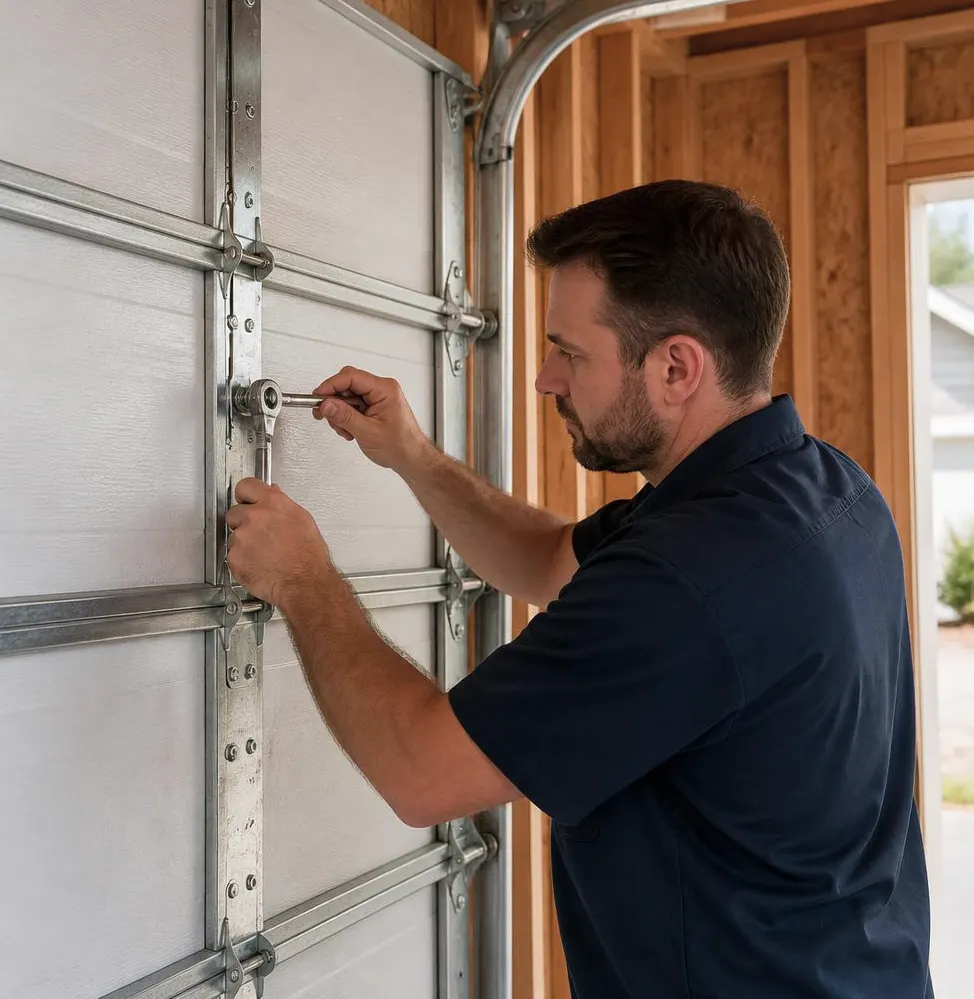
Step 2: Tighten Every Bolt and Bracket
This is the single most effective, most overlooked fix, and it's entirely homeowner-level work. Garage doors flex every time they open and close, and in a humid climate the wood and metal expand and contract more than they would in a drier region, which works bolts loose over time. With the door closed and the opener unplugged, go along the track brackets, hinges, and the motor mount on the ceiling with a socket wrench and snug everything up. Don't overtighten; you're looking for firm, not cranked down hard enough to strip the hole.
Step 3: Lubricate the Right Parts the Right Way
Once everything is tight, apply a lithium-based garage door lubricant to the hinges, the roller shafts (not the rollers themselves if they're nylon), the springs, and the opener's drive chain or screw. Skip the tracks entirely; lubricating the tracks actually attracts dust and makes the rollers slide instead of roll. A light coat is enough; wipe off any excess so it doesn't drip onto the floor or the car. Plan to redo this every few months here, since salt air and afternoon humidity break down lubricant faster than they would inland.
Step 4: Inspect and Replace Worn Rollers
Worn, cracked, or flat-spotted rollers are a common source of grinding noise, and in this climate steel rollers tend to rust faster than nylon ones, especially in garages closer to the coast. With the door closed, check each roller by hand for play or cracking. Rollers that are more than a few years old or visibly worn can usually be swapped one at a time with pliers and a bit of patience, as long as you're not touching the bottom bracket near the springs. If a roller is seized in a bent track, stop and call a technician; forcing it can pop the door off the track.
Step 5: Check the Chain or Belt Tension
A chain-drive opener that's too loose will slap against the rail with every cycle, which sounds a lot like something is broken even when it isn't. Most openers have a tensioning bolt or nut near the motor head; consult your opener's manual for the exact adjustment, since over-tightening can strain the motor. This is a reasonable DIY step as long as the opener is unplugged and you're not disassembling the motor housing itself.
Step 6: Know Where DIY Stops
Tightening hardware, lubricating, swapping a roller, and adjusting chain tension are all fair game for a homeowner with basic tools and some patience. What isn't: anything involving the torsion springs, the lift cables, a bent track, or the opener's internal gears and circuit board. Springs are under heavy tension and have caused serious injuries to homeowners who thought it was a simple fix. Cables fraying near the drum are a similar risk. If the noise is coming from that area, or if you've tightened and lubricated everything and the door is still loud, it's time to bring in a technician rather than keep guessing.
Step 7: Consider a Belt-Drive Swap
If your opener is a chain-drive model and you've done all the maintenance above and it's still noisy, the chain itself may simply be the problem. Chain-drive openers are inherently louder than belt-drive models because metal-on-metal contact transmits vibration through the rail and into the ceiling joists. Swapping to a belt-drive opener is a bigger job that involves replacing the rail assembly and reprogramming safety sensors, but it's often worth it for anyone with a bedroom above or next to the garage. This is a technician job, not a weekend project, since it also means remounting the motor head and resetting the travel limits correctly.
When to Call Coral Springs Overhead Door Co
If you've tightened hardware, lubricated the moving parts, and the door is still grinding, banging, or the opener seems to be straining, give us a call. Our techs can diagnose whether the issue is a worn part, a misaligned track, or an opener at the end of its life, and we offer both Garage Door Maintenance & Tune-Up visits to catch these issues early and full Garage Door Opener Installation if a belt-drive swap or full replacement makes more sense. We also handle Cable & Roller Replacement safely, which isn't a job worth risking on your own.
If your garage door opener in Coral Springs, Parkland, Coconut Creek, or anywhere nearby is driving you up the wall, reach out to Coral Springs Overhead Door Co and we'll get it running quiet again, before hurricane season has you opening and closing it more than usual.